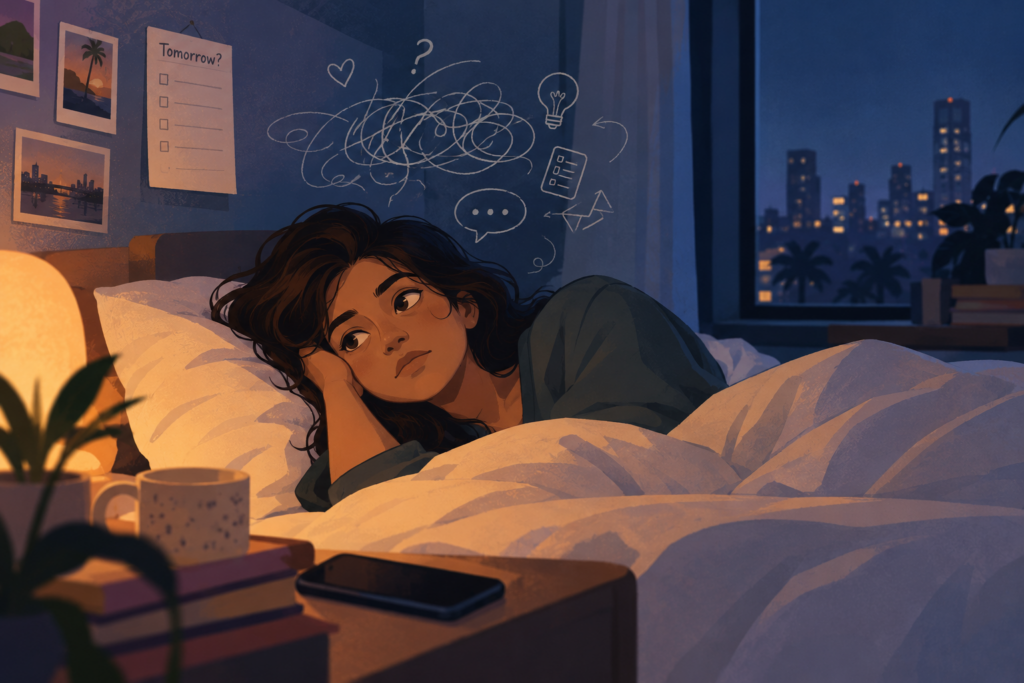
There is rarely one single reason. Here are the most common ones.
A Body Clock That Runs Late : Many people with ADHD have a delayed sleep-wake rhythm. Your brain feels alert and switched on late at night, and sleepiness arrives much later than it “should.” This is why “just go to bed earlier” rarely works. You can lie down at 10 p.m., but your body simply is not ready yet.
A Busy, Restless Mind : During the day, activity and distractions keep your mind occupied. At night, they fall away, and suddenly there are racing thoughts and a long list of unfinished mental to-dos. Quiet time becomes the brain’s chance to “catch up,” and it often does so loudly.
Hyperfocus and the Need for Stimulation After Dark : It is easy to get absorbed in a show, a game, work, or your phone at night, and to lose track of time completely. For many people with ADHD, boredom is also hard to tolerate. Lying still in a dark, quiet room can feel almost unbearable, so the brain looks for something more interesting.
Revenge Bedtime Procrastination : After a long, demanding day, the late-night hours may be the only time that feels like yours. Staying up to claim some “me time” is common among working professionals, students, and caregivers. The cost shows up the next morning, which then makes the next day even more demanding.
Emotional Wind-Up : Many people with ADHD feel emotions intensely. Rejection sensitivity, stress, and the day’s mistakes can replay in your head the moment the lights go off. It is hard to rest when your mind is busy going over what you said, what you missed, or what you should have done.
Other Contributors
• Caffeine timing, including that late-afternoon chai or coffee
• Irregular routines and varying wake-up times
• Late dinners
• Medication timing, which is worth discussing with your prescribing doctor rather than changing on your own