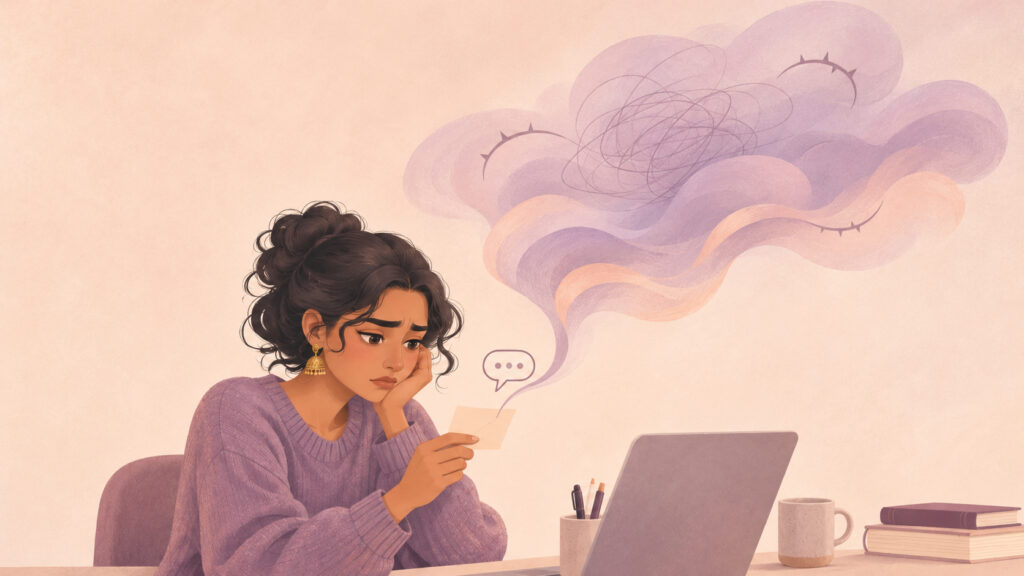
Rhea is a 32-year-old marketing manager in Mumbai. She sends a draft to her boss and gets a one-line reply: "Let's discuss tomorrow." By evening she has replayed the whole conversation in her head, decided she is about to lose her job, and stopped eating dinner. The next day, her boss only wanted to change a headline. Rhea knows her reaction was out of proportion. Knowing that does not make the hurt any smaller. She has been called "too sensitive" for as long as she can remember, and she has become very good at hiding how much small things sting.
If this sounds familiar, this article is for you. We will look at what rejection sensitive dysphoria (RSD) is, how it shows up in adults with ADHD, why it is so easily missed, what recent research says, and what can help.
(Note: The stories in this article are composite examples created to explain common patterns. They are not real clients.)
At Mitsu, in our clinics across Mumbai, our professionals often hear adults describe this pattern, usually after years of wondering why other people seem to shrug things off.