skip to content

Rejection Sensitive Dysphoria and ADHD: Why Criticism Hurts So Much

Reading Time 10 mins

Key Takeways

• Rejection sensitive dysphoria (RSD) is an intense, fast emotional reaction to real or perceived rejection or criticism. It is common in people with ADHD, but it is not a formal diagnosis.
• It often hides behind people-pleasing, perfectionism, and avoidance, so it is easy to mistake for anxiety, low self-esteem, or "just being too sensitive".
• In India, expectations to stay agreeable, constant comparison, and "log kya kahenge" can make it harder to talk about, and easier to blame yourself.
• Recent research describes rejection sensitivity in ADHD as a full-body experience that leads to withdrawal and masking. Struggling with criticism does not always mean ADHD, and a proper assessment is the only way to know.

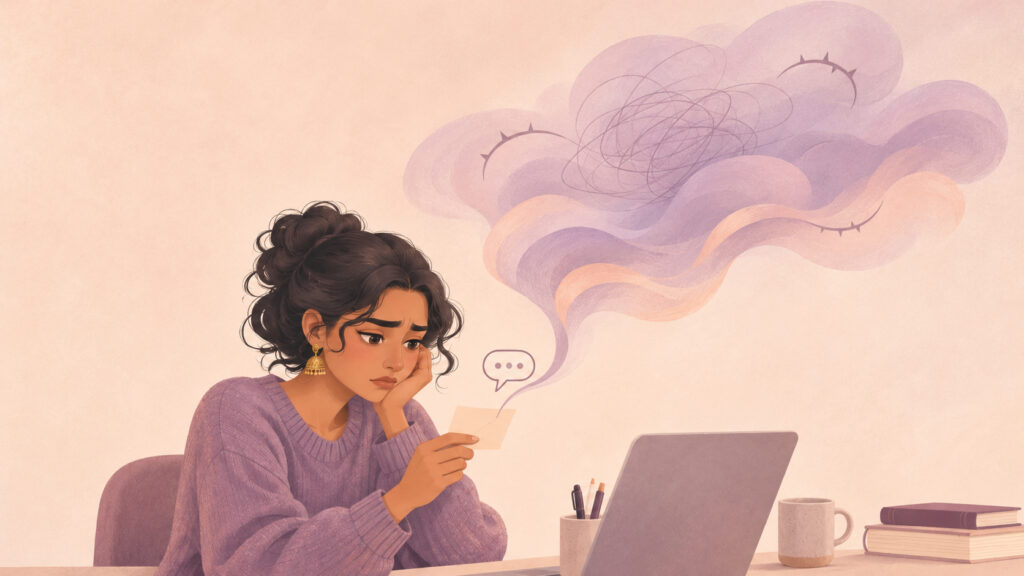
Rhea is a 32-year-old marketing manager in Mumbai. She sends a draft to her boss and gets a one-line reply: "Let's discuss tomorrow." By evening she has replayed the whole conversation in her head, decided she is about to lose her job, and stopped eating dinner. The next day, her boss only wanted to change a headline. Rhea knows her reaction was out of proportion. Knowing that does not make the hurt any smaller. She has been called "too sensitive" for as long as she can remember, and she has become very good at hiding how much small things sting.

If this sounds familiar, this article is for you. We will look at what rejection sensitive dysphoria (RSD) is, how it shows up in adults with ADHD, why it is so easily missed, what recent research says, and what can help.

(Note: The stories in this article are composite examples created to explain common patterns. They are not real clients.)

At Mitsu, in our clinics across Mumbai, our professionals often hear adults describe this pattern, usually after years of wondering why other people seem to shrug things off.


How RSD shows up in ADHD

RSD is an intense emotional reaction to rejection, criticism, or failure, whether it is real or only perceived. "Dysphoria" simply means a deep sense of distress. RSD is not a formal diagnosis in the DSM-5, and it is not limited to people with ADHD. But many adults with ADHD describe the same thing: a sudden wave of emotional pain after a small sign of rejection, bigger than the moment, and slow to settle.

Psychologists see this as part of the emotional dysregulation that often comes with ADHD. A short reply, a missed invitation, or a neutral tone can feel like a verdict on who you are.
People with RSD are not dramatic or weak. Their reactions are simply more intense, which is why they are so easily mistaken for personality.
A small note: everyone feels hurt by rejection, and not everyone who dislikes criticism has ADHD. This article is meant to help you understand, not to diagnose yourself.

Why it gets missed

  1. Not a core diagnostic criteria

    ADHD assessments focus mainly on attention, hyperactivity, and impulsivity. Emotional pain is not on that list, so it is rarely asked about. Researchers describe emotional dysregulation in adult ADHD as under-recognised, and often put down to mood or personality problems instead. The person is simply told to "toughen up".

  2. Masking and people pleasing

    To avoid being rejected, many people over-prepare, say yes to everything, stay quiet about their opinions, or avoid trying at all. From the outside this looks dependable and easy-going. On the inside it takes a lot of energy. Researchers call this masking, and it can leave people feeling disconnected from their real selves.

  3. Getting treated for something else first

    Many adults are first told they have anxiety, social anxiety, or depression. These can be real and need care. But when the pattern is rooted in ADHD, treatment for anxiety alone may help only partly, and the daily struggle continues.

  4. Triggers and life transitions

    Karan is a 28 year old designer in Bengaluru. He did well for two years. Then a new manager began giving blunt feedback in weekly reviews. Karan started avoiding meetings, over-polishing every file, and checking his phone for a friend's reply. The tricks that used to work stopped working.

    This is common. New jobs, performance reviews, dating and breakups, a friend's silence, parenting, and social media comparison can all set off RSD. The sensitivity was always there. The old coping system just ran out of room.

Does this sound like you?

• A neutral comment or a delayed reply can ruin your whole day
• You replay conversations for hours, or rehearse them in advance
• You avoid trying new things so you cannot be turned down
• You say yes to people even when you are exhausted
• Praise fades quickly, but criticism sticks for days
• You feel it in your body, such as a tight chest or a sinking stomach

If you said yes to several of these, it may be worth speaking to a mental health professional. It does not mean you have ADHD. It means your struggles deserve a closer look.

The emotional toll of living with RSD

When you do not know why criticism hurts so much, you blame yourself. Years of "Why am I so sensitive?" slowly turn into shame, withdrawal, and a feeling of never being enough. Some people stop speaking up in meetings, skip job applications, or avoid getting close to people, just to avoid the risk of being turned down. Many people also feel two things together when they finally put a name to it: relief and grief. Relief, because there is a reason. Grief, for all the years they spent being hard on themselves.
Both feelings are valid. Understanding your brain is not an excuse. It is a starting point.

Why this often goes unnoticed

In many Indian families, children grow up with marks, rankings, and comparison with cousins and neighbours. Feedback can be blunt, and often public. A child who cries after a harsh comment is told "don't take it to heart" or "don't be so sensitive". Hurt becomes something to hide, not something to explain. These things are not true of every family, but they are common.
As adults, the pressure continues. "Log kya kahenge" shapes what people say and do. At work, there is a strong expectation to stay agreeable with seniors. In joint families, in-law comparisons and the idea of the "perfect" son, daughter, spouse, or parent leave little room to admit that something hurts.
There is also limited awareness of adult ADHD and emotional health, and stigma can stop people from asking for help. So the pain stays private, and people end up blaming their character, not their wiring.

What the research says

Indian research on RSD itself is very limited, but these recent studies and reviews from India offer useful clues into emotional dysregulation and sensitivity associated with ADHD.

  1. Repeated criticism leaves a mark.

    A 2025 qualitative study of Indian women with ADHD interviewed women who only realised they had ADHD as adults. The researchers describe how repeated critical remarks took a heavy toll on self-esteem, which continued well into adulthood. Because school achievement is often seen as a path to being socially acceptable, good marks became a way to hide low self-esteem, and left behind internalised shame.

  2. Indian clinicians are noticing emotional pain too

    A 2025 case series in the International Journal of Medicine and Public Health described three young adults with ADHD at an Indian psychiatry clinic. All three showed emotional dysregulation. One of them, a 21 year old medical student, found it hard to face criticism and kept replaying critical comments. ADHD medication gave partial benefit, and therapy was linked with better emotional control over time.

  3. Women's struggles are easy to miss

    A recent review of ADHD in India describes a study of 101 treatment-seeking adults, 78 men and 23 women. Women with ADHD were often under-recognised or misdiagnosed, because their symptoms leaned towards inner struggles such as mood disturbance, low self-esteem, and strong inattention or hyperfocus.

  4. Emotional struggles go beyond the checklist

    A 2025 systematic review in the Journal of Indian Association for Child and Adolescent Mental Health describes adult ADHD in India as under-recognised. It notes that emotional dysregulation can persist or become stronger in adulthood as hyperactivity eases. It also summarises that adults with ADHD showed difficulties in executive function, emotional regulation, and social understanding beyond the formal diagnostic symptoms, with women reporting more mood swings.

What else can look like RSD?

Intense reactions to criticism do not always mean ADHD. Many other things can cause them, including:
• Social anxiety
• Depression
• Past trauma or long-term stress
• Burnout and poor or broken sleep
• Low self-esteem and perfectionism
• Mood and personality-related conditions
This is why symptoms alone cannot confirm ADHD, and why a proper assessment matters. A good assessment looks at your whole life, including your childhood, your health, and your current stress, so that the right problem gets the right support.

Signs it might be time to get support

• Rejection or criticism affects your work, relationships, or self-worth more than you would like
• The emotional pain takes days to settle, or feels unmanageable
• You avoid opportunities, such as jobs or relationships, to avoid being turned down
• You have long-standing attention or organisation difficulties as well
• You have always felt "too much" and could never explain whySupport can include an assessment, individual therapy, and guidance for the people around you, so that your family and friends understand what you are going through.

Reaching out is not a weakness. For many people, it is the first time someone says, "This makes sense."If you are having thoughts of harming yourself, please contact local emergency services or a crisis helpline right away.

What helps after recognition

The goal is to work with your brain, not against it. Here are some practical steps:
• Check the story. Ask yourself what you actually know, and write down two or three other reasons for the silence or the comment.
• Ask directly. Instead of guessing, try "Was the work okay?" or "Is everything fine between us?" A clear answer often ends hours of replaying.
• Settle your body. Because RSD can be felt physically, a short walk, slow breathing, music, or a call with someone you trust can help your body calm down first.
• Speak to yourself like a friend. Years of harsh self-talk will not disappear in a day, and that is okay.
• Consider therapy. Therapy can help with shame, perfectionism, emotional intensity, and building coping tools that suit your life.

How Mitsu approaches this

At Mitsu, across our clinics in Mumbai, we work with each person in a collaborative and tailored way. We begin with a careful assessment to understand your patterns and rule out other causes. We then offer individual therapy, psychiatric support, and coping strategies that fit your work, relationships, and daily life.
If an assessment confirms ADHD, your professional may also discuss other treatment options with you, including medication. Some adults find that treating ADHD also eases emotional reactivity. Decisions about your care are always made together with you.

Care team illustration

Need support with what you're experiencing?

If something you've read here feels relevant to you, our care team can help you understand the right next step.

Let's chat

Share

Frequently Asked Questions

Is rejection sensitive dysphoria a real diagnosis?

RSD is not an official diagnosis in the DSM-5. It is a clinical term used to describe intense emotional reactions to rejection or criticism, commonly reported by people with ADHD. Clinicians still take it seriously because of how much it can affect daily life and relationships.

What does an RSD episode feel like?

Many people describe a sudden wave of emotional pain, often with shame, anxiety, or anger. It can come with physical signs such as a tight chest or nausea. Afterwards, people may withdraw, over-apologise, or replay the moment for hours or days.

Is RSD the same as social anxiety?

No, though they can overlap. RSD is a strong reaction to perceived or real rejection, often after the event. Social anxiety is usually a fear of being judged that builds before and during social situations. A proper assessment can help tell them apart.

Can you have RSD without ADHD?

Yes. Sensitivity to rejection is not limited to ADHD. It can also appear with anxiety, depression, trauma, or low self-esteem. This is why an assessment should look at your whole picture, not just one symptom.

How is RSD managed?

There is no single fix. Many people benefit from understanding their patterns, practical coping tools, and individual therapy. If ADHD is also present, treating it can help. A professional can build a plan with you that fits your life.

We’re here to help

Share your details and our team will call you shortly.

Thank you - we’ve received your request

Our team will call you shortly to help you get started